
The material a frame is made of affects how it feels, how it handles daily use and how easy it is to adjust or repair. There is no single best material: it depends on how you wear your glasses. Here is a practical comparison of the three you will see most often. For a deeper side-by-side, see our guide to TR90, acetate and metal frames.
Metal frames
- Feel: usually slim and light, with a lot of choice in shape.
- Adjustability: often easy to adjust, particularly nose pads, which makes fitting more precise.
- Things to watch: thin metal can bend out of shape if the frame is sat on or carried loose in a bag, and some people find certain metals irritate their skin.
- Care: keep the frame in a case, and have the fit rechecked if it goes out of line.
Acetate frames
- Feel: typically thicker, with a solid look and a large choice of colours and patterns.
- Adjustability: can be adjusted with controlled warming, but there are limits, and a frame that has cracked is not simply fixed.
- Things to watch: can feel heavier, and may be uncomfortable on a small face if the size is wrong.
- Care: avoid prolonged heat, such as on a car dashboard.
TR90 frames
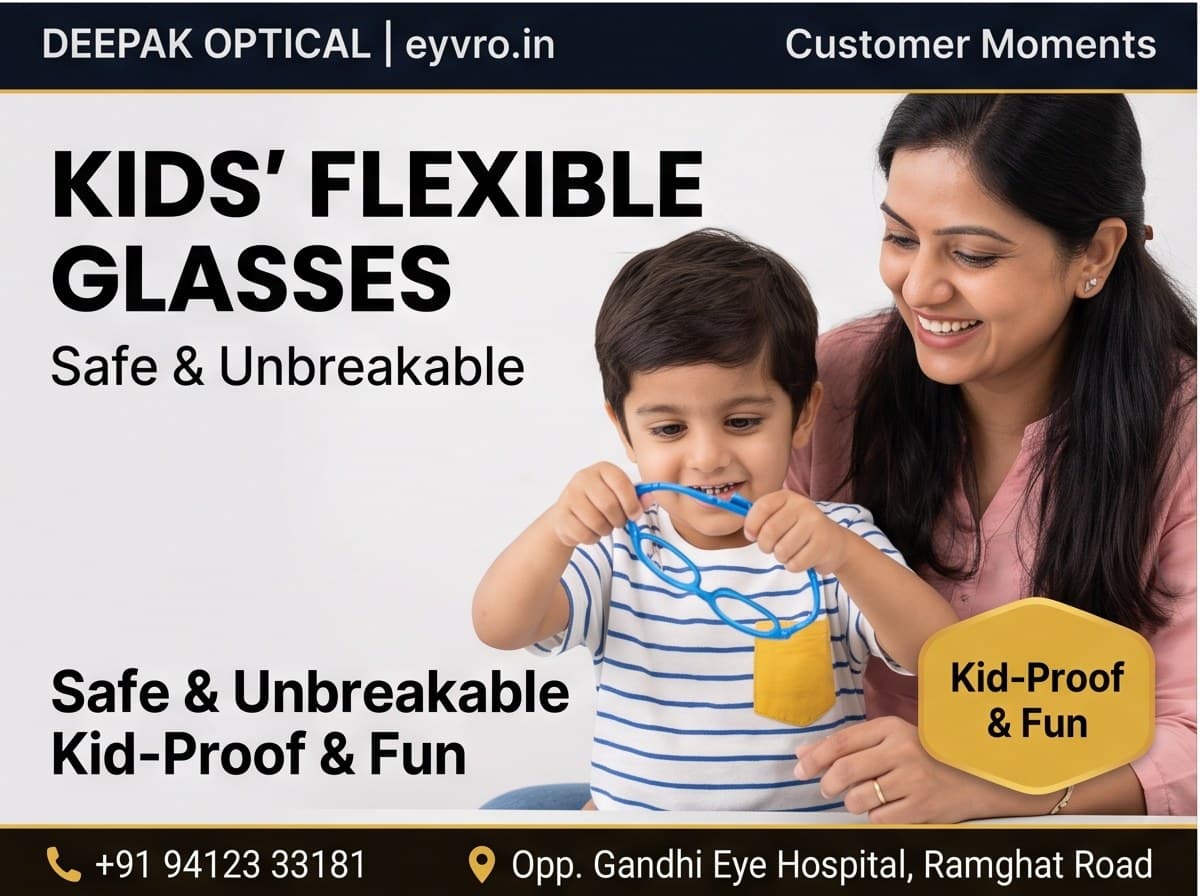
- Feel: a lightweight, flexible material often used for sports, children's and everyday frames.
- Flexibility: tends to flex rather than snap under bending.
- Things to watch: the range of styles can be narrower, and adjustability is more limited than with metal.
- Care: avoid heat and solvents.
How to choose
- Think about how you use them. All-day wear, sport, children, or a dressier look each suit different materials.
- Prioritise comfort and fit. A well-fitted frame in any material beats a poorly fitted one in the "best" material.
- Check the hinges and joints. They are where frames usually fail.
- Consider your prescription. A stronger prescription may suit certain shapes and sizes better.
- Ask about repair. Some frames are easier to adjust or repair than others. See repair versus replacement.
A note on durability
Material is only part of durability. Construction, hinge design, thickness and how the frame is treated matter as much. Compare frames in person, and ask about differences instead of relying on appearance.
This article is general information, not medical advice. For persistent symptoms or any sudden change in your vision, see an eye-care professional.
Need Help Choosing the Right Eyewear?
Every customer has different vision requirements, preferences, and budgets. Deepak Opticals offers in-store eye testing and spectacle repair services, including repairs for frames purchased elsewhere.
Contact us to discuss your eyewear requirements, explore available options, or ask about repairing your existing spectacles.
Deepak Opticals, Your Local Destination for Eyewear and Spectacle Repairs.